Electrical
Engineering
General
Master the fundamentals of electrical systems, wiring, and engineering practices — and earn a nationally recognised certificate that opens doors across Namibia's growing energy sector.
About This Programme
What is Electrical Engineering (General)?
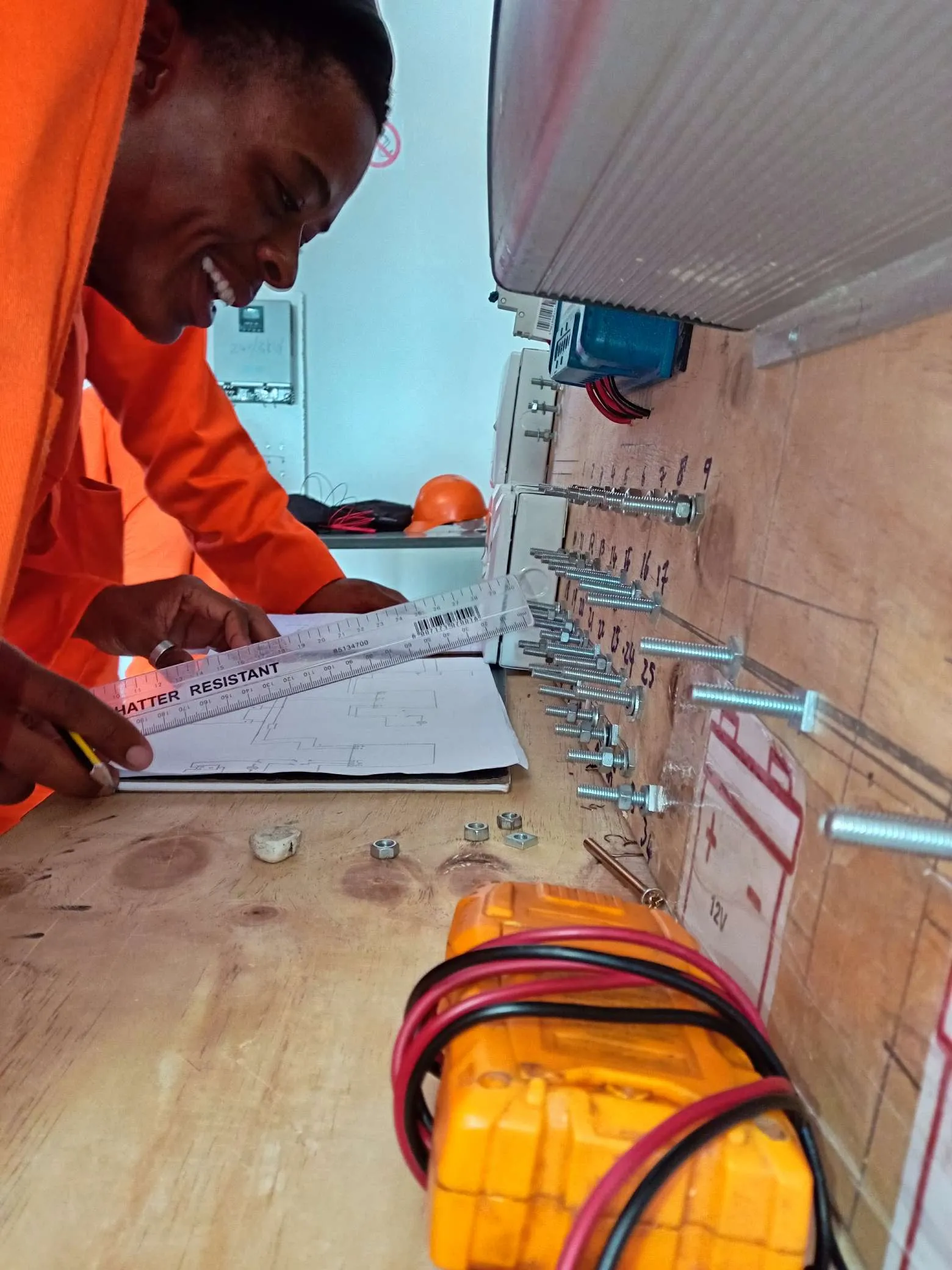
The National Vocational Certificate in Electrical Engineering (Electrical General) at NQF Level 2 is an NTA-registered qualification (Q2471) that recognises people who have the competencies required for electrical engineering work. Requiring a total of 103 credits, this programme covers everything from basic circuit protection and single-phase wiring to electronic components, insulation testing, and safe site practices.
Graduates are equipped to install electrical cables and accessories, design and construct single-phase circuits, use test equipment for electrical measurements, install and test appliances, and maintain lighting systems and structures — across domestic, commercial, and industrial settings.
This qualification leads vertically to the National Vocational Certificate in Electrical Engineering (Electrical General) at NQF Level 3, and includes a mandatory 6-month Workplace Integrated Learning (WIL) component — either as a structured industrial attachment or an apprenticeship with an NTA-approved employer.
Curriculum
What You'll Learn
This qualification requires 103 compulsory credits drawn directly from the NTA-registered qualification Q2471. All unit standards below are compulsory.
Electrical Engineering — Core
Electrical Installation
Electrical Power Lines Installation
Electrical Installation and Maintenance
Entrepreneurship & Business
Foundational & Workplace Skills
Total: 103 compulsory credits. Includes a mandatory 6-month Workplace Integrated Learning (WIL) period — industrial attachment or apprenticeship with an NTA-approved employer.
Learning Outcomes
What You'll Be Able to Do
Install electrical systems
Wire domestic and light industrial installations safely and to code.
Read electrical diagrams
Interpret wiring schematics, circuit diagrams, and technical drawings.
Test and fault-find
Use meters and test equipment to identify and rectify faults.
Work safely on site
Apply occupational health and safety standards in all electrical work.
Maintain electrical equipment
Service, inspect, and maintain motors, switchgear, and distribution boards.
Apply entrepreneurship skills
Understand business principles and demonstrate the knowledge required to work as or become a successful entrepreneur in the electrical trade.
Admission
Entry Requirements
- Minimum Entry:Ordinary level certificate or recognised equivalent qualification, as specified in NTA qualification Q2471
- Communication Skills:Ability to demonstrate basic communication skills in English, Numeracy, and Physical Science
- Bridging Programme:Grade 9 students with a D or better in English, Maths and Science may enter via the KTIN Bridging Programme before progressing to Year 1
- Recognition of Prior Learning (RPL):Competencies covered in this qualification may also be assessed through RPL — contact KTIN admissions for details
After You Graduate
Career Opportunities
Graduates of this programme are ready to enter Namibia's electrical and construction sectors or start their own electrical contracting business.
Electrical Artisan
Work for construction companies on residential and commercial projects.
Maintenance Technician
Maintain electrical systems in factories, mines, and industrial plants.
Self-Employed Electrician
Start your own electrical contracting business serving homes and businesses.
NamPower / Utility Technician
Work with Namibia's power utility on electricity distribution, infrastructure, and maintenance.
Mine & Industrial Electrician
Maintain and install electrical systems in Namibia's mining and heavy industrial sector.
Progress to NQF Level 3
This certificate leads directly to the National Vocational Certificate in Electrical Engineering (General) at NQF Level 3.
Assessment
How You'll Be Assessed
Assessment combines written theory examinations, practical demonstrations, and continuous assessment throughout the programme — all conducted in line with the NTA national assessment framework for the TVET system. This includes performance and achievement assessment acquired through the mandatory Workplace Integrated Learning (WIL) period.
The WIL component requires either a 6-month structured industrial attachment at an approved workplace, or an apprenticeship arrangement (70% at workplace / 30% at KTIN) with an NTA-approved employer. All assessment arrangements comply with the National Policy on Work-Integrated Learning for TVET.