Horticulture &
Crop Husbandry
Grow your future in Namibia's land. Master horticultural techniques, crop production, livestock handling, irrigation, and agribusiness skills — and earn a nationally recognised certificate that opens doors across Namibia's agricultural sector. Entry from Grade 10.
About This Programme
What is Horticulture & Crop Husbandry?
The National Vocational Certificate in Horticulture and Crop Husbandry (Level 2) is a hands-on qualification registered with the Namibia Training Authority (NTA) under reference Q0857. It recognises learners who have demonstrated the competencies required for performing agricultural tasks across agronomy and horticulture — from soil science and plant propagation to livestock handling, machinery operation, and agribusiness management.
Requiring a minimum of 120 credits to complete, this programme is nationally recognised across Namibia's commercial farms, government agricultural departments, NGOs, and agribusiness employers. It is fully accessible from Grade 10 — no Maths or Science prerequisites. Upon completion, graduates may progress directly to the National Vocational Certificate in Crop and Horticulture Production at Level 3.
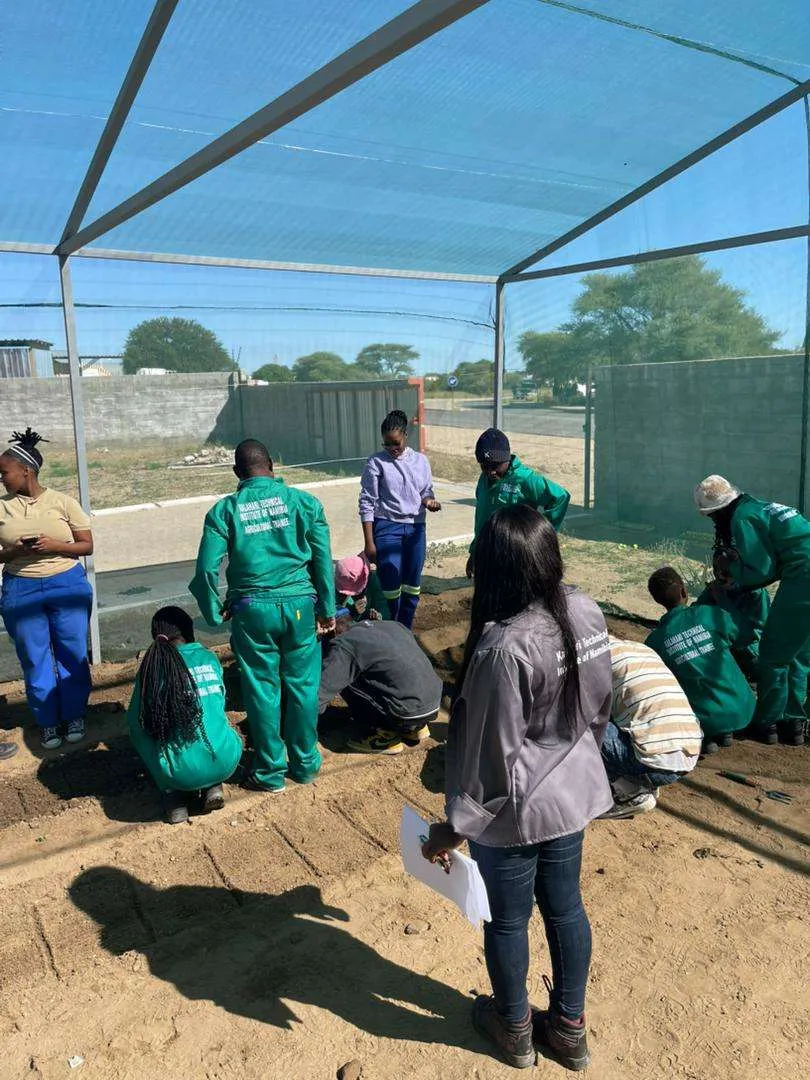
What sets KTIN apart is our on-site working garden, where students move beyond the classroom and into real agricultural practice from day one. Learners work directly in the garden throughout the programme — planting, irrigating, composting, and harvesting — developing the hands-on confidence that Namibia's agricultural sector demands.
Curriculum
What You'll Learn
This programme requires a minimum of 120 credits — 93 compulsory and 27 elective. The compulsory unit standards below are drawn directly from the NTA-registered qualification (Q0857).
Plant Husbandry & Crop Production
Livestock & Animal Husbandry
Machinery, Equipment & Infrastructure
Farm Management & Agribusiness
Foundational & Workplace Skills
Plus a minimum of 27 elective credits chosen from additional unit standards in crop establishment, pest management, post-harvest handling, livestock, and machinery maintenance.
Learning Outcomes
What You'll Be Able to Do
Prepare and manage soil
Assess soil health, apply amendments, and prepare land for planting.
Propagate and grow crops
Sow seeds, transplant seedlings, and manage crops through the growing cycle.
Operate irrigation systems
Install, manage, and maintain drip and spray irrigation for efficient water use.
Manage pests and disease
Identify common crop pests and diseases and apply safe, effective control measures.
Handle and store produce
Apply post-harvest techniques to reduce losses and maintain crop quality.
Apply agribusiness and entrepreneurship skills
Use financial literacy, basic economics, and workplace communication to operate effectively in an agricultural business environment.
Admission
Entry Requirements
- Minimum Entry:Grade 10 — as registered with the NTA for this qualification (Q0857)
- Mathematics & Science:No Mathematics or Science prerequisite — making this programme one of the most accessible vocational qualifications at KTIN
- Literacy & Numeracy:Learners must demonstrate basic literacy and numeracy suitable for an agricultural workplace environment
- English Proficiency:Basic workplace communication level required, as per NTA standards
After You Graduate
Career Opportunities
Graduates are ready to work in Namibia's growing agricultural sector or establish their own small farming enterprise, contributing directly to the country's food security.
Crop Farmer / Market Gardener
Produce vegetables, herbs, and crops for local markets and food supply chains.
Agricultural Extension Worker
Support government or NGO programmes training smallholder farmers across Namibia.
Nursery and Landscaping
Work in commercial nurseries, garden centres, or municipal landscaping projects.
Irrigation Technician
Install and maintain irrigation systems on commercial farms and smallholder operations.
Farm Worker / Agribusiness Employee
Work on commercial farms, cooperatives, or government agricultural projects across Namibia.
Progress to NQF Level 3
This certificate leads directly to the National Vocational Certificate in Crop and Horticulture Production (Level 3).
Assessment
How You'll Be Assessed
Assessment combines written examinations, practical fieldwork demonstrations, and continuous assessment throughout the programme. All assessments are conducted in line with NTA standards.